
Matariki: the Māori New Year
On cold winter mornings, something remarkable appears on the northeastern horizon.
Mānawatia a Matariki
Step outside before dawn on a clear Waikato morning in late June, let your eyes adjust to the dark, and look low on the northeastern horizon. You'll find a small, tight cluster of stars — not showy, not dramatic, but unmistakable once you know what you're looking for. That is Matariki.
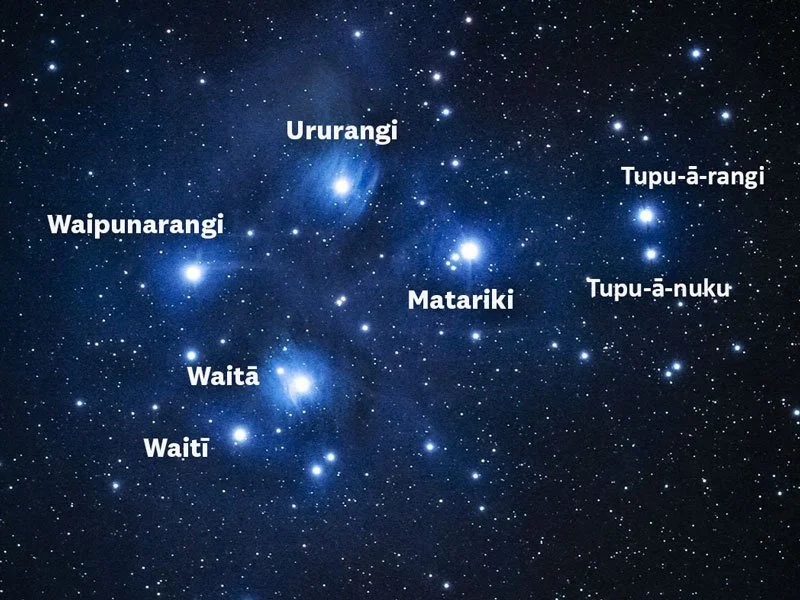
Matariki is a star cluster, not a constellation
Learn more at Te Papa (https://www.tepapa.govt.nz/legend-matariki-and-six-sisters)
Its reappearance each year signals the Māori New Year — a time for three things: honouring those who have passed since the previous rising, celebrating the present with whānau, and setting intentions for the year ahead. It is one of the most quietly beautiful traditions in Aotearoa, and from a dark paddock in North Waikato, with no city glow to dull the sky, it is something you can actually witness firsthand.
In Māori tradition, nine individual stars make up the cluster, each connected to a different part of the natural world. On a working farm like Te Karaka Station, where the rains, winds, and health of the land are daily realities, their meanings feel grounded rather than abstract.
Matariki
The mother star — health, well-being, and the gathering of people.
Pōhutukawa
The star of the departed. Connects us to loved ones who have passed.
Tupuānuku
Everything grows in the earth — kūmara, roots, and harvested crops.
Tupuārangi
Food from above — birds, fruits, and berries in the trees.
Waitī
Freshwater — rivers, lakes, and all the life within them.
Waitā
The ocean and the food it sustains.
Waipuna-ā-rangi
Rain — water that falls from the sky.
Ururangi
The winds. His brightness predicts the year's temperament.
Hiwa-i-te-rangi
The wishing star — dreams, aspirations, and the year's intentions.
To find Matariki, look for Orion's belt — the three stars in a row that New Zealanders know as the bottom of the pot — and trace a line to the left until you find the soft smudge of the cluster sitting just above the horizon before dawn. Allow fifteen minutes for your eyes to fully adjust, and leave your phone screen in your pocket.
Watch the video below to learn how to find the Matariki Stars
Winter nights here are cold. Bring a coat, pour something warming, and step outside.